
A lot of sellers think their logistics costs explode after export.
In reality, many of the unnecessary costs already happened before the cargo even left China.
Goods produced in Chengdu get transferred to Shenzhen one batch at a time. Factories in different cities send inventory separately instead of consolidating cargo. Products arrive at export warehouses with incorrect carton labels and miss Amazon or Temu appointments before they even board the ship.
By the time the shipment reaches the port, the business has already lost money through domestic transfers, repeated handling, delayed dispatch, and warehouse coordination mistakes.
For many ecommerce sellers and exporters, the real logistics problem is not international shipping anymore.
It is China warehouse distribution services and domestic warehouse coordination.
The Most Expensive Part of Shipping Is Often the Part Nobody Notices
When order volume is still small, most businesses can survive with fragmented logistics.
One factory ships products.
Another warehouse handles temporary storage.
A third-party truck company moves cargo to the port.
At first, the system looks cheap.
Then sales increase.
Suddenly:
- Inventory starts arriving late
- Different SKUs reach the warehouse separately
- Trucks wait for incomplete cargo
- Warehouses repeatedly unload and reload products
- Export schedules become unstable
The business is still moving products, but profit margins quietly shrink inside domestic logistics operations.
This is especially common for sellers managing:
- Amazon FBA shipments
- Temu orders
- TikTok Shop inventory
- Multi-factory sourcing
- Large SKU catalogs
Many companies only calculate sea freight or air freight costs.
Very few calculate how much money disappears before export consolidation even begins.
Why Cross-Province Transfers Quietly Destroy Profit Margins
China’s manufacturing resources are spread across different regions.
A seller sourcing furniture from Foshan, electronics from Shenzhen, and packaging materials from Yiwu often ends up running disconnected domestic transportation routes at the same time.
Without regional warehouse coordination, cargo may travel across provinces multiple times before export.
That creates hidden costs through:
- Repeated truck dispatch
- Split cargo transfers
- Temporary storage fees
- Delayed container loading
- Additional labor handling
Por exemplo, cargo produced in Western China often gets transferred through several domestic logistics providers before finally reaching coastal export hubs.
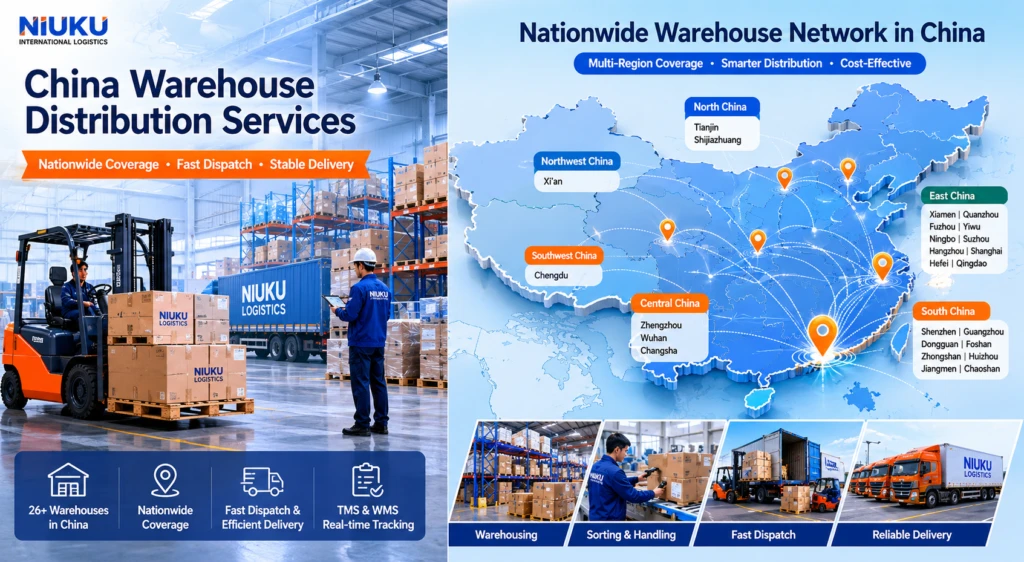
A coordinated warehouse distribution system reduces these unnecessary movements by consolidating cargo earlier and positioning inventory closer to outbound transportation routes.
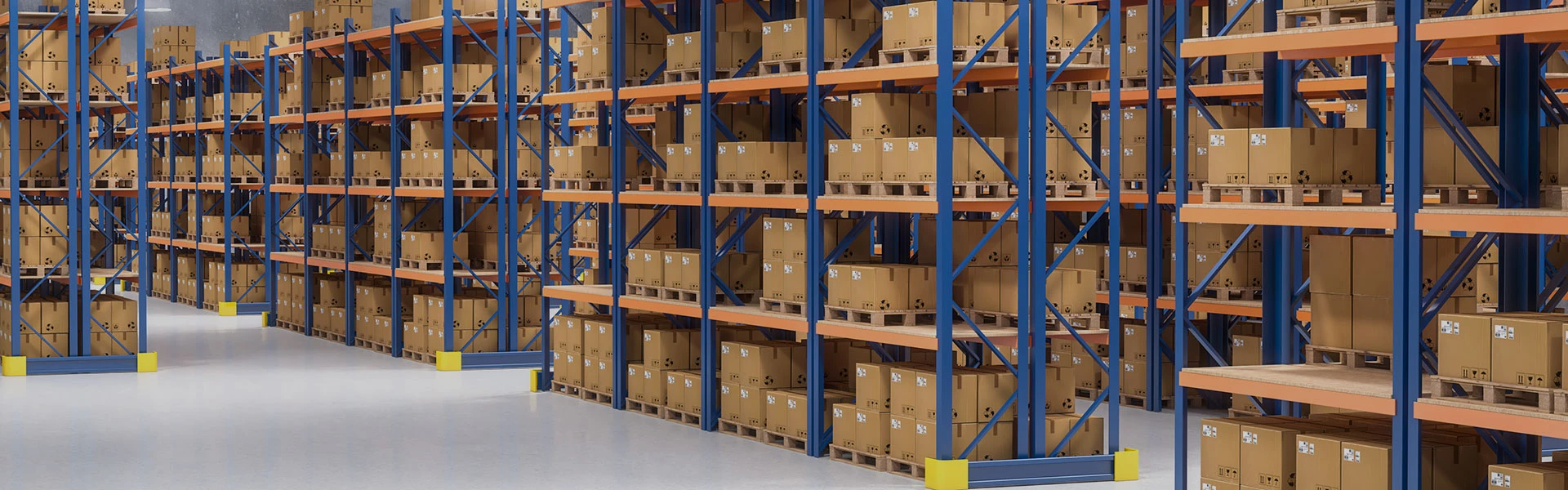
Niuku International Logistics operates more than 26 warehouses across major production and logistics regions throughout China, including Shenzhen, Cantão, Dongguan, Poderia, Ningbo, Xangai, Wuhan, Zhengzhou, Chengdu, and Xi’an.
For sellers sourcing from multiple factories, regional warehouse consolidation can significantly reduce domestic transfer pressure before export even starts.
One Wrong Label Can Destroy an Entire Shipment
Most warehouse mistakes are not dramatic.
They are small operational errors that become expensive later.
A carton label gets attached to the wrong pallet.
A SKU barcode does not match the platform requirement.
Factory packaging arrives mixed between different orders.
For sellers shipping into Amazon FBA or Temu warehouses, these problems can turn inventory into unusable stock.
The worst part is that many businesses only discover the mistake after the cargo already arrives overseas.
At that point, correction costs become far more expensive.
This is why warehouse distribution is no longer just about storage space. It is also about inspection and operational control before export.
Niuku’s warehouse management system supports inventory verification, shipment coordination, and multi-stage cargo management across domestic warehouse operations.
For businesses handling large shipment volumes, centralized warehouse coordination helps reduce labeling mistakes, missed cargo, and repeated handling risks before goods leave China.
Faster Warehousing Means Nothing if Inventory Visibility Is Broken
Many logistics providers still operate with fragmented communication.
Factories update inventory separately.
Warehouses track stock manually.
Transportation schedules are confirmed through spreadsheets and chat groups.
The result is predictable:
Nobody has a clear real-time view of inventory movement.
This becomes extremely dangerous during promotional periods or peak sales seasons when stock movement changes daily.
Niuku developed integrated TMS and WMS systems to improve:
- Inventory visibility
- Cargo coordination
- Shipment tracking
- Warehouse transfers
- Export scheduling
For ecommerce businesses managing inventory across multiple suppliers and cities, centralized logistics visibility reduces operational blind spots before they become expensive problems.
Domestic Distribution Is Now Part of Cross-Border Ecommerce
Five years ago, many exporters treated domestic warehousing as temporary storage before international shipping.
That model no longer works efficiently for fast-moving ecommerce operations.
Hoje, domestic warehouse distribution directly affects:
- Export speed
- Container utilization
- Delivery timelines
- Inventory replenishment
- Platform performance
Businesses that still rely on disconnected domestic logistics usually end up paying more for emergency transfers, rushed export arrangements, and unstable shipment schedules later.
The companies scaling fastest today are usually the ones building integrated domestic distribution systems before international shipping pressure appears.
Conclusão
China warehouse distribution services are no longer only about moving inventory between cities.
For growing ecommerce sellers and exporters, domestic warehouse coordination now directly affects transportation cost, export efficiency, and operational stability.
As order volume increases across multiple factories, sales channels, and regions, businesses increasingly need warehouse systems that reduce unnecessary transfers, improve cargo visibility, and prevent operational mistakes before export begins.
With nationwide warehouse coverage, integrated logistics systems, and extensive ecommerce fulfillment experience, Niuku International Logistics helps businesses build more efficient domestic distribution operations while reducing hidden logistics costs across China