
Canada is a high-potential market for importers and e-commerce brands due to its strong purchasing power, stable logistics infrastructure, and growing demand for cross-border products. Tuttavia, shipping from China to Canada involves more than just international freight. Customs compliance, warehousing strategy, seasonal disruptions, and last-mile delivery all directly impact cost and efficiency.
Why Canada Is an Attractive Market for Global Sellers
Many Amazon and e-commerce sellers expand into Canada after establishing operations in the United States.
Key advantages include:
- Strong e-commerce adoption across multiple product categories
- High reliance on imported consumer goods
- Direct access to Amazon Canada and Walmart Canada marketplaces
- Natural extension of the North American supply chain
For brands seeking regional expansion, Canada is often the next strategic step after the U.S. mercato.
Understanding Canada’s Logistics Environment
Although Canada shares similarities with the U.S. logistics system, its geography creates unique operational challenges.
Vast Geographic Distribution
Canada is the second-largest country in the world by land area, with population concentrated in a few major regions:
- Toronto
- Vancouver
- Montreal
- Calgary
This creates a distribution challenge where inventory must be strategically positioned to avoid long inland transit times.
Importance of Regional Warehousing
Effective warehousing strategy is essential for reducing delivery time and cost.
Proper inventory placement can:
- Reduce cross-country transportation delays
- Lower last-mile delivery costs
- Improve order fulfillment speed
- Balance inventory across regions during peak seasons
Niuku’s overseas fulfillment hubs support regional distribution across Canada, helping sellers position inventory closer to end customers.
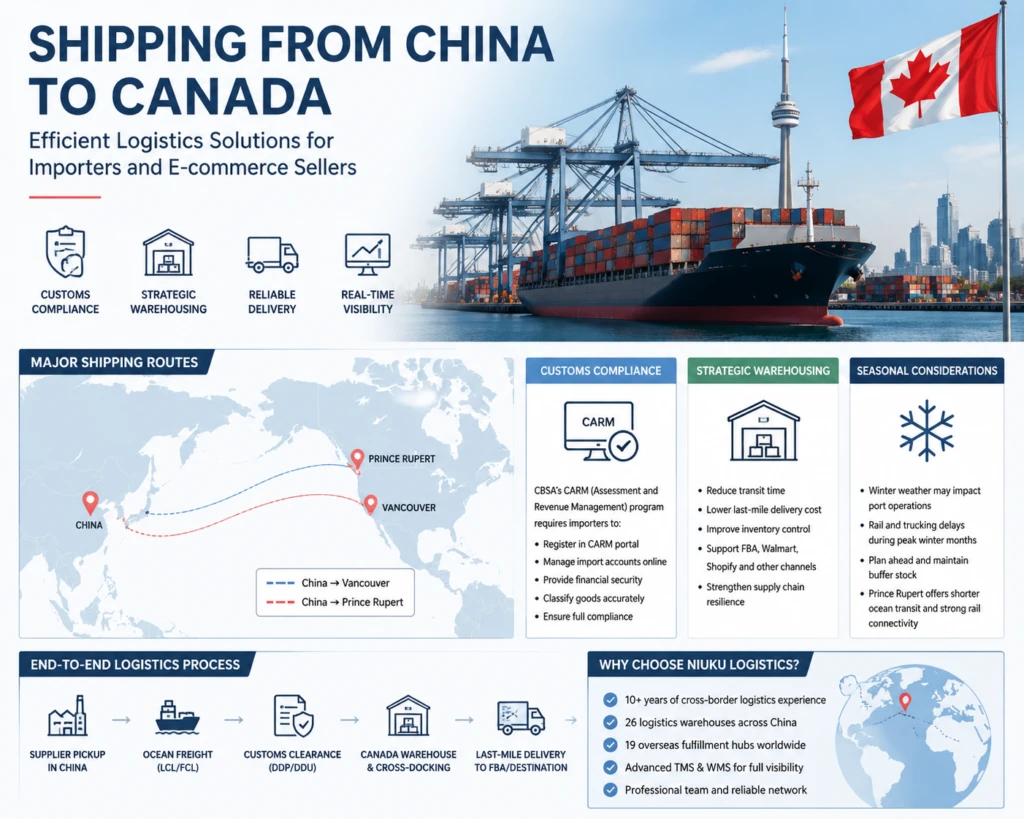
Role of Warehousing in Cross-Border Logistics
Relying only on port-to-door shipping increases risk and reduces flexibility.
Strategic warehousing provides:
- Faster order fulfillment
- Lower transportation costs
- Improved inventory control
- Multi-channel distribution capability (Logistica di Amazon, Walmart, Shopify)
- Reduced dependence on long-distance trucking
A well-structured warehouse network is essential for scalable Canadian operations.
Customs Compliance and CARM Implementation
Customs compliance is one of the most critical components of shipping to Canada.
Since the full implementation of CBSA’s CARM (Assessment and Revenue Management) program, importers are required to:
- Register digitally in the CARM portal
- Manage import accounts online
- Provide financial security (bond requirements)
- Ensure accurate tariff classification (HS codes)
- Maintain compliance with Canadian import regulations
Risks of Non-Compliance
Failure to comply with CARM requirements can result in:
- Customs clearance delays
- Cargo holds at port
- Financial penalties
- Additional storage and demurrage fees
Niuku provides DDP and DDU customs solutions to help importers manage compliance efficiently and reduce clearance risks.
Seasonal Weather and Transportation Disruptions
Canada’s winter conditions can significantly impact logistics performance.
Common disruptions include:
- Port congestion and weather delays at major gateways such as Vancouver
- Rail transportation delays affecting inland distribution routes from western Canada
- Road safety restrictions impacting last-mile trucking operations
Important Correction on Geography
While Vancouver is the primary West Coast gateway, Prince Rupert is also a critical northern port with strong rail connectivity to inland Canada.
Compared to Vancouver, Prince Rupert often benefits from:
- Shorter ocean transit routes from Asia
- Faster rail connections to central distribution hubs
- Relatively lower congestion during peak shipping periods
Tuttavia, both ports can still experience seasonal weather-related disruptions, requiring proper inventory planning and buffer stock strategies.
Shipping to Amazon FBA Canada
Amazon Canada (FBA) has strict inbound requirements that must be followed precisely.
Key requirements include:
- Accurate labeling and barcode compliance
- Proper palletization and packaging standards
- Appointment scheduling at fulfillment centers
- Carrier coordination for inbound delivery windows
Common Amazon Canada fulfillment centers include:
- YVR4 (Vancouver region)
- YYZ4 (Toronto region)
- YOO1 (Ontario region)
Niuku provides full FBA logistics support, including freight forwarding, sdoganamento, labeling, and final delivery coordination.
Digital Supply Chain Visibility
Modern logistics requires real-time data transparency to ensure efficiency and predictability.
Niuku’s proprietary TMS (Sistema di gestione dei trasporti) E WMS (Sistema di gestione del magazzino) provide:
| Feature | Business Value |
|---|---|
| Real-time tracking | Full shipment visibility from origin to destination |
| ETA prediction | Improved inventory planning accuracy |
| Inventory monitoring | Reduced stockout risk and better replenishment planning |
| Digital documentation | Faster customs clearance and audit readiness |
| Centralized dashboard | Simplified logistics management |
These tools help businesses reduce uncertainty and improve decision-making across the supply chain.
How Niuku Supports Canadian Market Expansion
Niuku provides integrated logistics solutions designed for scalable international growth:
- Ocean freight and air freight services (LCL/FCL options)
- Customs clearance (DDP/DDU solutions aligned with CARM requirements)
- Canadian warehousing and cross-docking services
- Amazon FBA logistics and appointment management
- Last-mile trucking across major Canadian regions
FAQ
Q1: What affects shipping costs from China to Canada?
Shipping costs depend on freight method, customs compliance, warehousing strategy, last-mile delivery distance, and seasonal disruptions.
Q2: What is CARM and why is it important?
CARM (CBSA’s Assessment and Revenue Management program) is Canada’s digital customs system requiring importers to register, manage accounts online, and ensure accurate compliance documentation.
Q3: How does warehousing improve efficiency in Canada?
Strategic warehousing reduces transit time, lowers last-mile costs, and improves inventory distribution across major regions like Toronto and Vancouver.
Q4: Can Niuku ship directly to Amazon FBA Canada?
Yes. Niuku handles the full process including freight, sdoganamento, labeling, palletization, and FBA appointment delivery.
Q5: How can businesses improve Canada supply chain performance?
By combining accurate forecasting, regional warehousing, digital tracking systems, and compliant customs handling under CARM regulations.
Conclusion
Shipping from China to Canada requires more than freight transportation. Customs compliance under CARM, regional warehousing strategy, seasonal weather conditions, and FBA requirements all directly affect logistics performance.
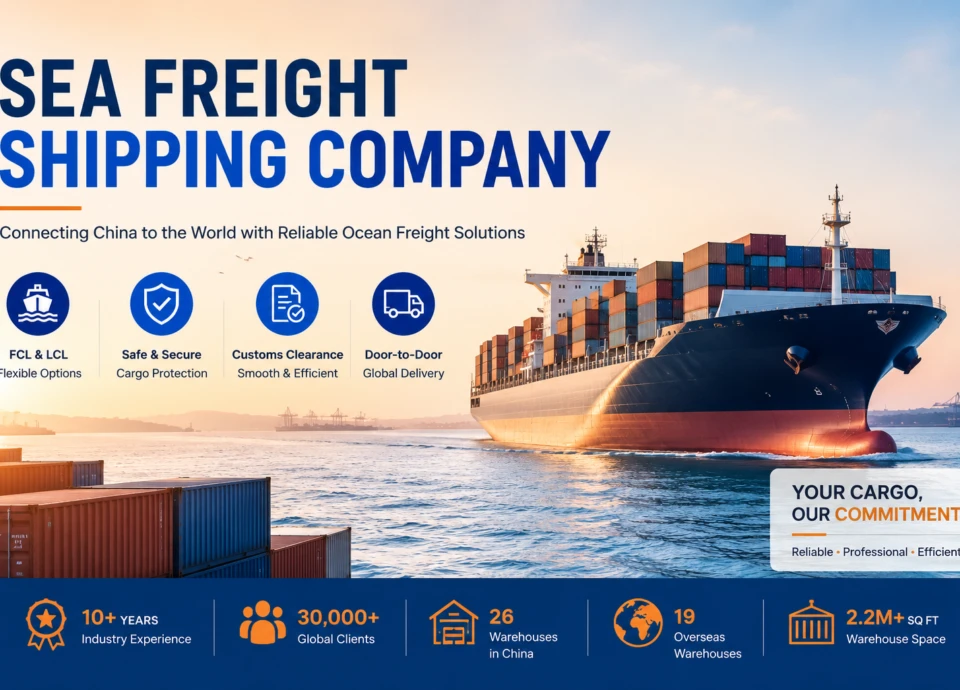
With over a decade of experience, support for more than 30,000 global sellers, a global network of 26 logistics warehouses across China and 19 overseas fulfillment hubs, and advanced TMS/WMS systems, Logistica Niuku provides end-to-end solutions that ensure compliance, visibility, and efficient cross-border delivery into the Canadian market.