
For many ecommerce businesses, inventory problems rarely begin inside the warehouse. They usually start earlier, when customer demand moves faster than the original shipping plan.
A product suddenly trends on TikTok. An Amazon campaign performs better than expected. Seasonal demand arrives ahead of schedule. By the time inventory warnings appear, ocean freight is often no longer fast enough to solve the problem.
This is one reason why more sellers now use China to US air freight as part of their regular replenishment strategy instead of treating it only as an emergency option.
In cross-border ecommerce, shipping speed affects far more than delivery timelines. Delayed inventory can interrupt Amazon FBA appointments, reduce product rankings, increase storage pressure, and create stock gaps during peak sales periods.
At the same time, faster transportation alone does not automatically solve supply chain pressure.
Many delays happen after cargo lands in the United States. Customs clearance issues, airport congestion, missed warehouse appointments, and poor last-mile coordination can still slow down replenishment even when products move by air.
For growing ecommerce brands, the real challenge is no longer simply finding cargo space. It is finding a logistics system that connects transportation, customs processing, warehousing, and final delivery under one coordinated workflow.
Why More Sellers Are Combining Air Freight With Regular Inventory Planning
Sea freight still remains the most cost-effective option for large-volume cargo. Tuttavia, ecommerce demand has become harder to predict than before.
A sudden increase in ad performance or a viral product launch can quickly drain inventory levels. Waiting another 30 A 40 days for ocean freight may create larger business losses than paying for faster transportation.
This is especially common for:
- Amazon FBA replenishment
- Seasonal products
- Consumer electronics
- Fast-moving ecommerce goods
- Campagne promozionali
Many sellers now use a hybrid shipping model:
- Sea freight handles stable inventory movement
- Air freight supports urgent replenishment
This approach creates more flexibility while reducing the risk of inventory shortages during high-demand periods.
Why Air Freight Still Fails for Some Sellers
One common misconception is that air freight automatically guarantees smooth delivery.
In reality, customs clearance remains one of the biggest causes of shipping disruption.
Codici HS errati, incomplete declarations, or tax-processing issues can leave cargo waiting at the airport longer than expected. For ecommerce businesses, that delay can affect inventory planning across multiple marketplaces.
Instead of using separate providers for transportation, customs handling, and local delivery, many sellers now prefer integrated DDP (Consegnato sdoganato) soluzioni di spedizione.
This reduces communication gaps while improving shipment coordination from departure to final delivery.
Visibility has also become increasingly important.
Many traditional freight providers only update shipment status after major transportation stages. For growing ecommerce operations, limited tracking creates uncertainty around inventory planning and customer fulfillment.
Niuku International Logistics supports China to US air freight through integrated logistics coordination that includes direct flight resources, customs handling, deposito all'estero, and local truck delivery support.
The company also developed its own TMS and WMS systems to improve shipment visibility, inventory tracking, and transportation management throughout the logistics process.
Why Local Delivery Coordination Matters
For many ecommerce shipments, the biggest delivery problems happen after cargo arrives in the United States.
Missed warehouse appointments, local transfer delays, and poor communication between providers can easily slow down final delivery.
This becomes especially important for Amazon FBA shipments, where delayed receiving appointments may affect inventory availability for days.
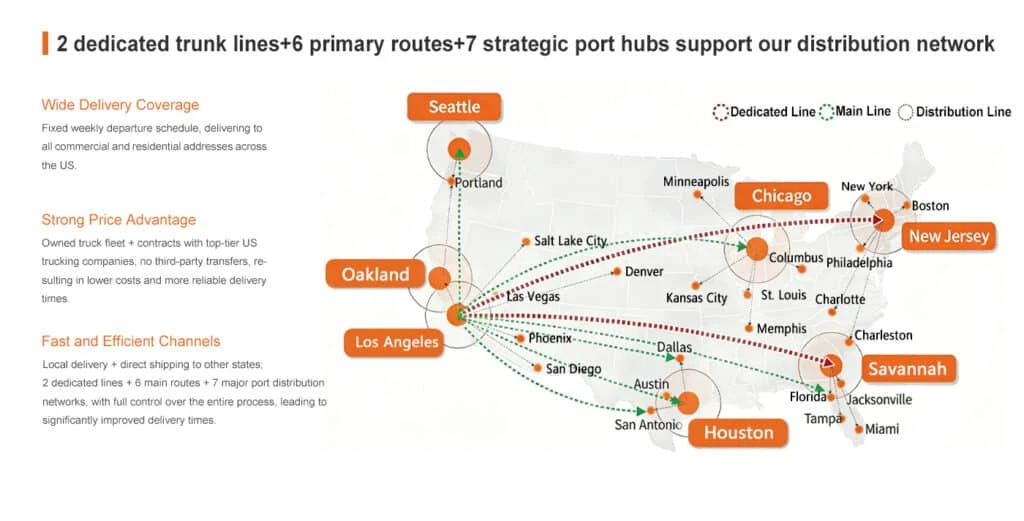
To reduce these risks, Niuku combines air freight services with local truck teams alongside FedEx and UPS delivery resources, helping businesses improve final-mile coordination after customs clearance.
For urgent replenishment shipments, smoother local delivery often matters more than saving a small percentage on freight cost.
Different Air Freight Strategies for Different Cargo Types
Not every shipment requires the same transportation solution.
For lightweight and time-sensitive products, Air + Express delivery usually provides the fastest replenishment option. Cargo is transported by air and then delivered through courier services such as FedEx or UPS.
This method is commonly used for:
- Urgent FBA inventory
- Small ecommerce shipments
- Product launches
- Fast-selling consumer products
For larger or heavier shipments, Air + Truck delivery often creates a better balance between speed and transportation cost. Cargo arrives by air before local truck delivery is arranged inside the United States.
Many sellers combine both solutions depending on shipment urgency and inventory pressure.
Why Warehouse Networks Have Become More Important
Warehouse positioning now plays a major role in supply chain efficiency.
Niuku operates more than 26 warehouses across China alongside overseas warehouses in the United States, Canada, il Regno Unito, ed Europa.
This warehouse network helps businesses:
- Consolidate cargo more efficiently
- Reduce inland transportation delays
- Improve export coordination
- Reposition inventory faster during peak seasons
For sellers sourcing from multiple factories across different regions, regional warehousing can significantly improve shipping efficiency before cargo even reaches the airport.
How long does China to US air freight usually take?
Transit time depends on the shipping method and destination region.
Air + Express delivery usually takes around 5 A 8 days after departure from China and is commonly used for urgent ecommerce replenishment.
Air + Truck delivery normally takes around 8 A 12 days and is often more cost-effective for larger or heavier cargo.
Transit time may also vary depending on customs clearance and seasonal shipping congestion.
What is the difference between Air + Express and Air + Truck delivery?
Air + Express combines international air freight with courier delivery services such as FedEx or UPS. It prioritizes faster final delivery for smaller or time-sensitive shipments.
Air + Truck delivery uses local truck transportation after cargo arrives in the United States. It is generally more suitable for bulkier cargo or shipments requiring lower transportation costs.
Is air freight better than sea freight for Amazon sellers?
Air freight is often better for urgent inventory replenishment or seasonal demand spikes, while sea freight remains more suitable for stable long-term inventory planning and large-volume shipments.
What is DDP air freight shipping?
DDP (Consegnato sdoganato) shipping means customs clearance, duties, and tax handling are completed before final delivery, helping simplify the import process for sellers.
Conclusione
China to US air freight has become more than just a faster shipping method. For many ecommerce businesses, it is now part of a broader inventory and fulfillment strategy designed to reduce stock pressure and improve delivery responsiveness.
As marketplace competition continues to increase, sellers need logistics solutions that combine transportation speed with stable customs handling, shipment visibility, and reliable local delivery coordination.
With integrated air freight services, warehouse resources across China and overseas markets, digital tracking systems, and local delivery support in the United States, Niuku International Logistics helps businesses manage replenishment more efficiently while reducing supply chain disruption.